PILLAR I
Establishment of a School of Integrative Knowledge
PILLAR I
Establishment of a School of Integrative Knowledge
THE 2026-2028 STRATEGIC PLAN
Università Cattolica del Sacro Cuore towards 2028

The 2026-2028 Strategic Plan is the result of a shared process that involved the entire university community, integrating innovation and tradition, excellence and inclusion. It is an operational tool, based on the centrality of the person, solidarity and the common good, aimed at generating impact and guiding the University into the future
The strategic pillars
The issues first discussed by the university community and subsequently addressed by the Working Groups during the co-design phase are organised into five fundamental pillars, in dialogue and in relation to one another. Each pillar covers a thematic area with its own peculiarities and, at the same time, represents a piece of the broader strategic plan.
5 elementi trovati
-
PILLAR I
Establishment of a School of Integrative Knowledge
-
 PILLAR II
Valorisation of research and young researchers
PILLAR II
Valorisation of research and young researchers
-
 PILLAR III
High-quality educational offer, in person and remotely
PILLAR III
High-quality educational offer, in person and remotely
-
 PILLAR IV
Internationalisation, accreditations, rankings and the Africa Plan
PILLAR IV
Internationalisation, accreditations, rankings and the Africa Plan
-
 PILLAR V
Fundraising inspired by identity and institutional principles
PILLAR V
Fundraising inspired by identity and institutional principles
Download the Strategic Plan documents
The guiding principles of the vision
In a national and international context marked by rapid scientific and technological developments, growing interdependence of cultural phenomena and new educational needs, the University plays an active role in generating knowledge, fostering responsible innovation, supporting the employability of its graduates and contributing to the development of territories. This is achieved through qualified relationships with institutions, businesses, local, civil and church communities, the scientific-academic community in Italy and abroad and by actively working in the creation of networks and partnerships.

The Strategic Plan formulation method
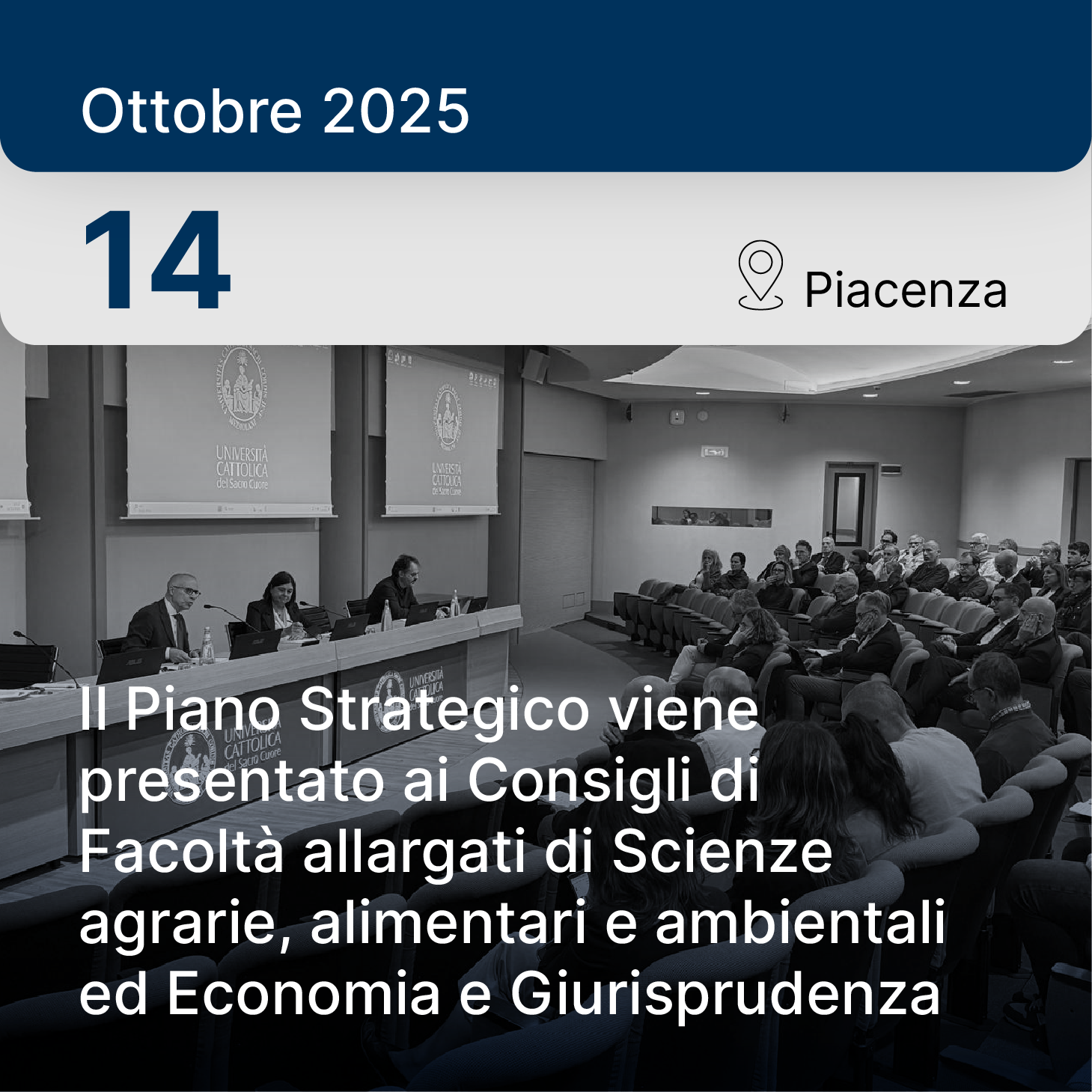
The 2026–2028 Strategic Plan was born as a structured and participatory process, aimed at building a shared vision based on evidence, expert input, listening to the different components of the University and dialogue with stakeholders. The process was based on the principles of participatory governance and inclusive strategic planning, enhancing collegiality and the role of academic structures.
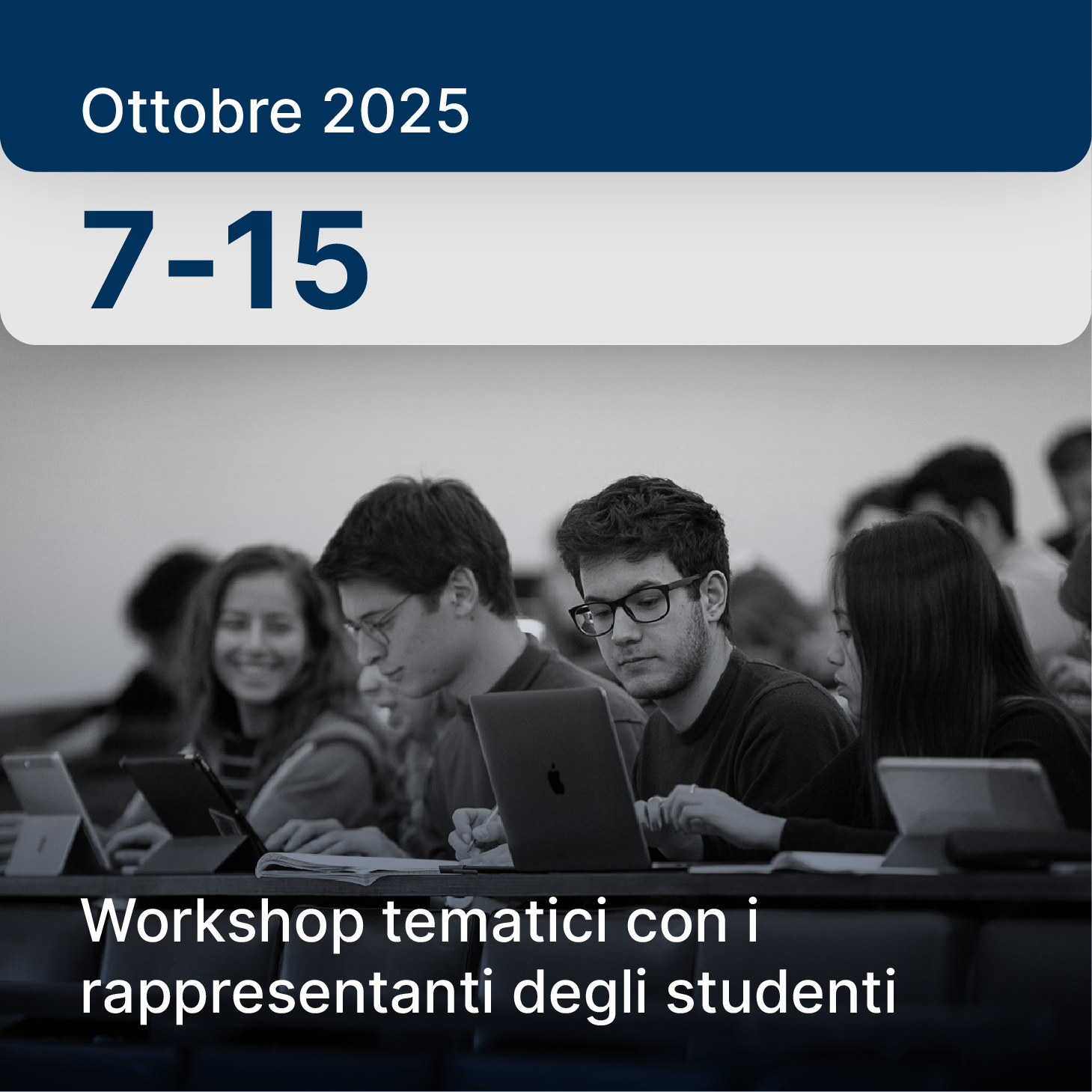
The entire university community – students, researchers, faculty and technical-administrative staff – was involved through a whole-community engagement approach. Participation, on a voluntary basis, was organised in a multi-channel mode: thematic workshops, questionnaires and a call for ideas encouraged comparison, verification of proposals and development of innovative projects.
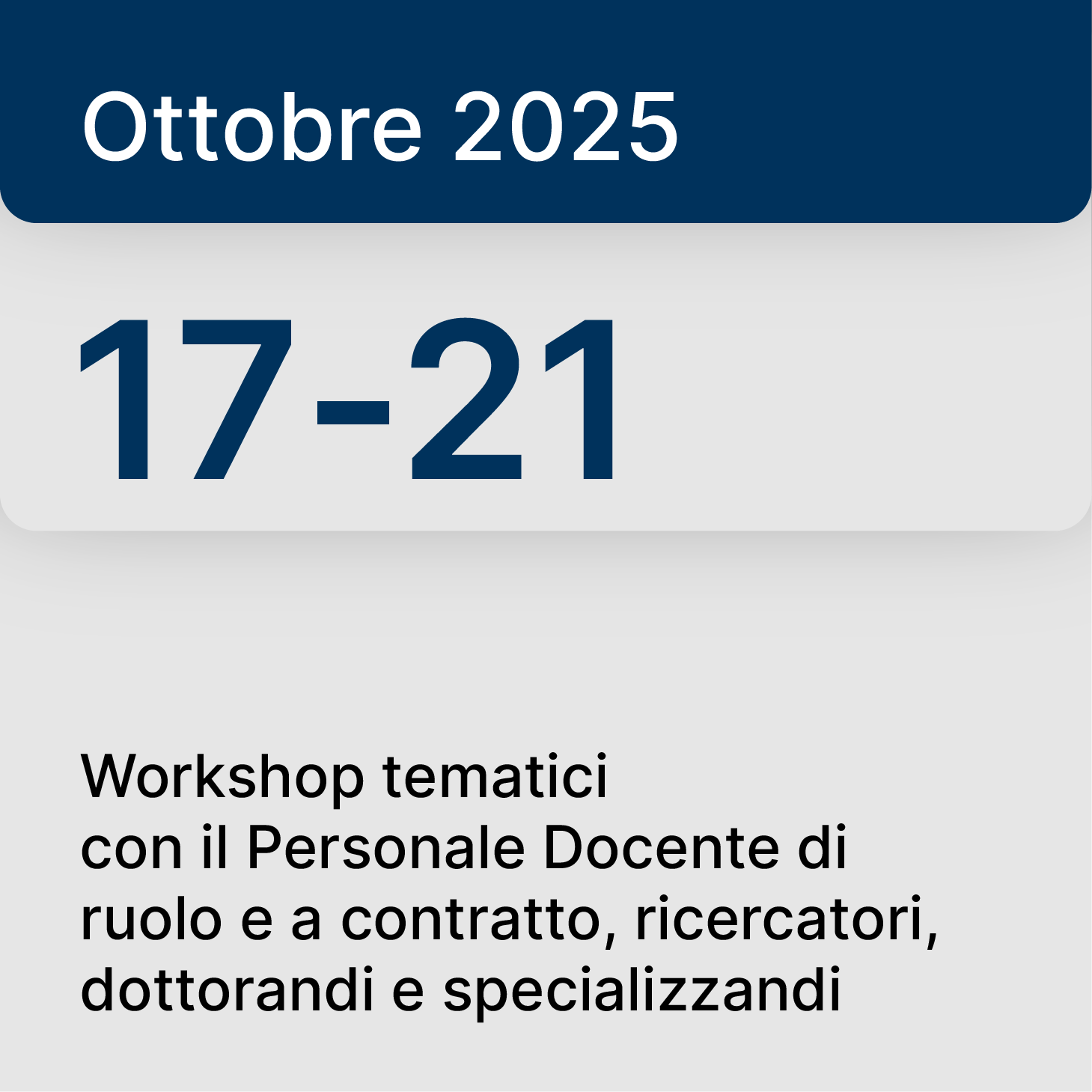
- 34 online workshops lasting two hours each, with a maximum number of 25 participants, each dedicated to one of the five strategic pillars.
- 665 people involved including tenured professors and lecturers, researchers, research fellows, PhD students, adjunct professors; technical-administrative staff; student representatives; pastoral assistants and theology professors and lecturers; directors of on-campus colleges; representatives of alumnae and alumni associations; members of the University Committee for Employability.
- An online questionnaire that collected 1,711 responses.
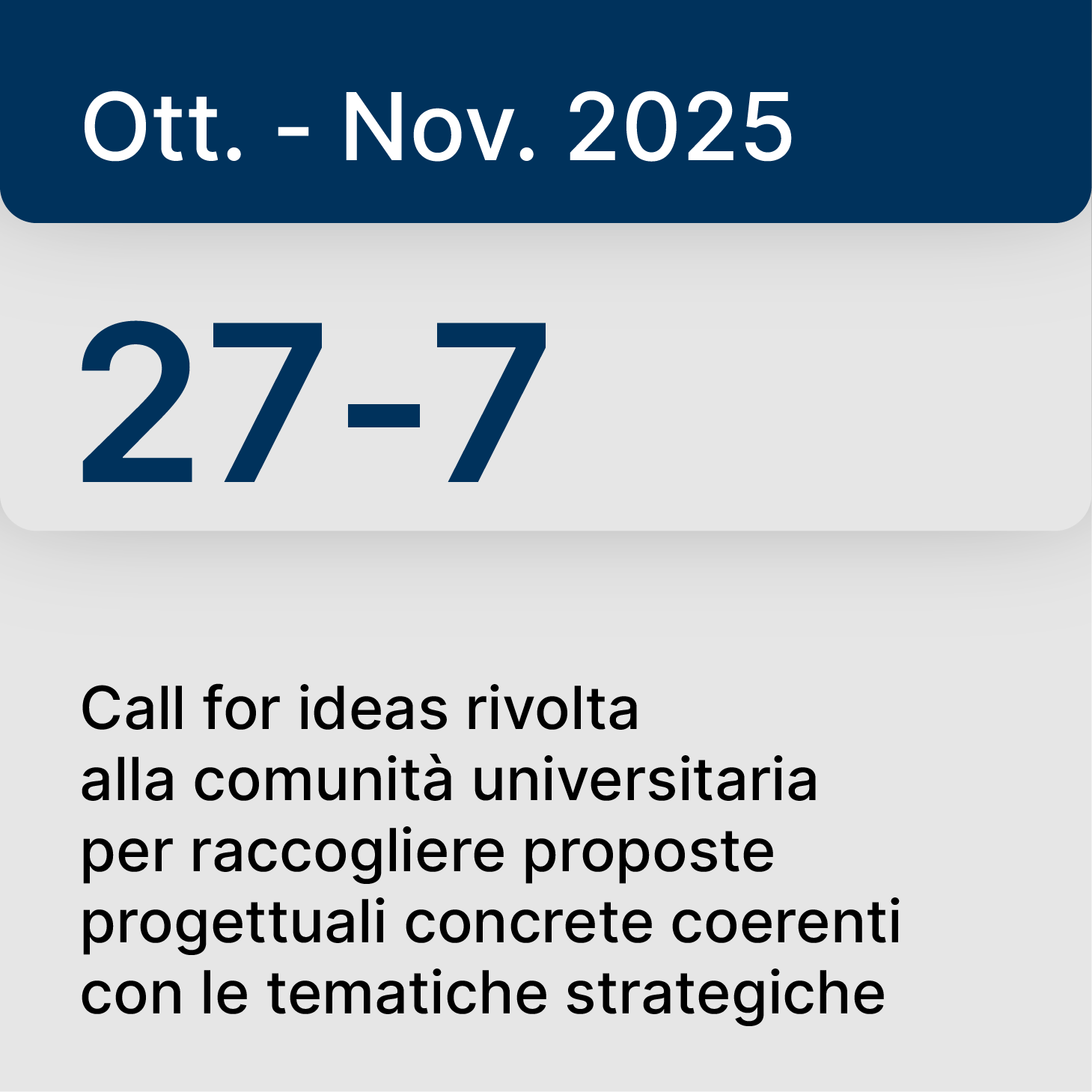
- A call for ideas, from which 54 project proposals were submitted distributed over each of the five strategic pillars.
- Descriptive statistical analysis and thematic analysis (topic analysis), with coding and subsequent grouping into macro-clusters of the proposals that emerged in the listening phase.
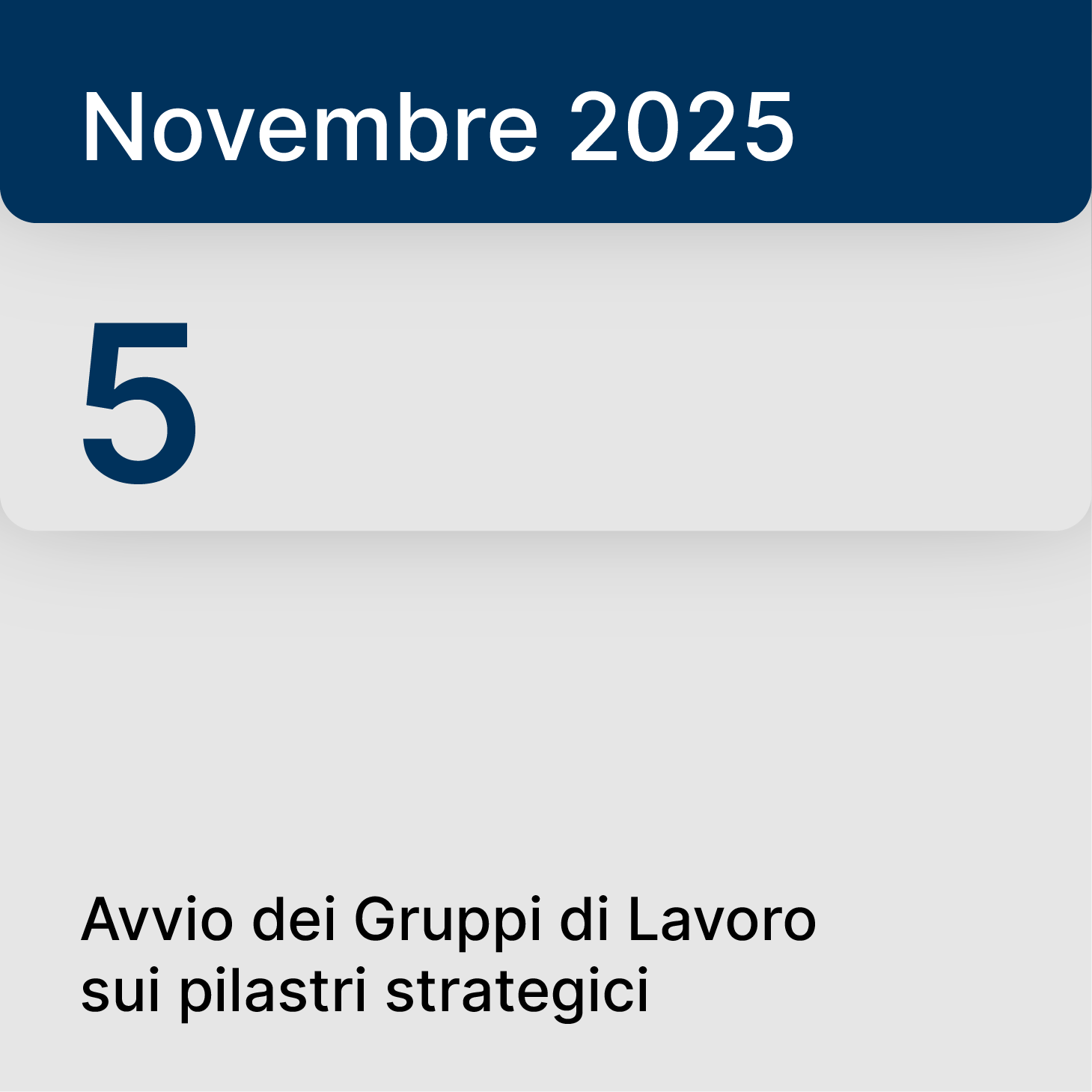
- Establishment of 5 Working Groups, one for each pillar, composed of faculty and technical-administrative staff with specific expertise, coordinated by the Deans and supported by facilitators.
Key stages
29 elementi trovati
-

-

-

-

-
-
-
-
-
-
-
-
-
-
-
-
-
-
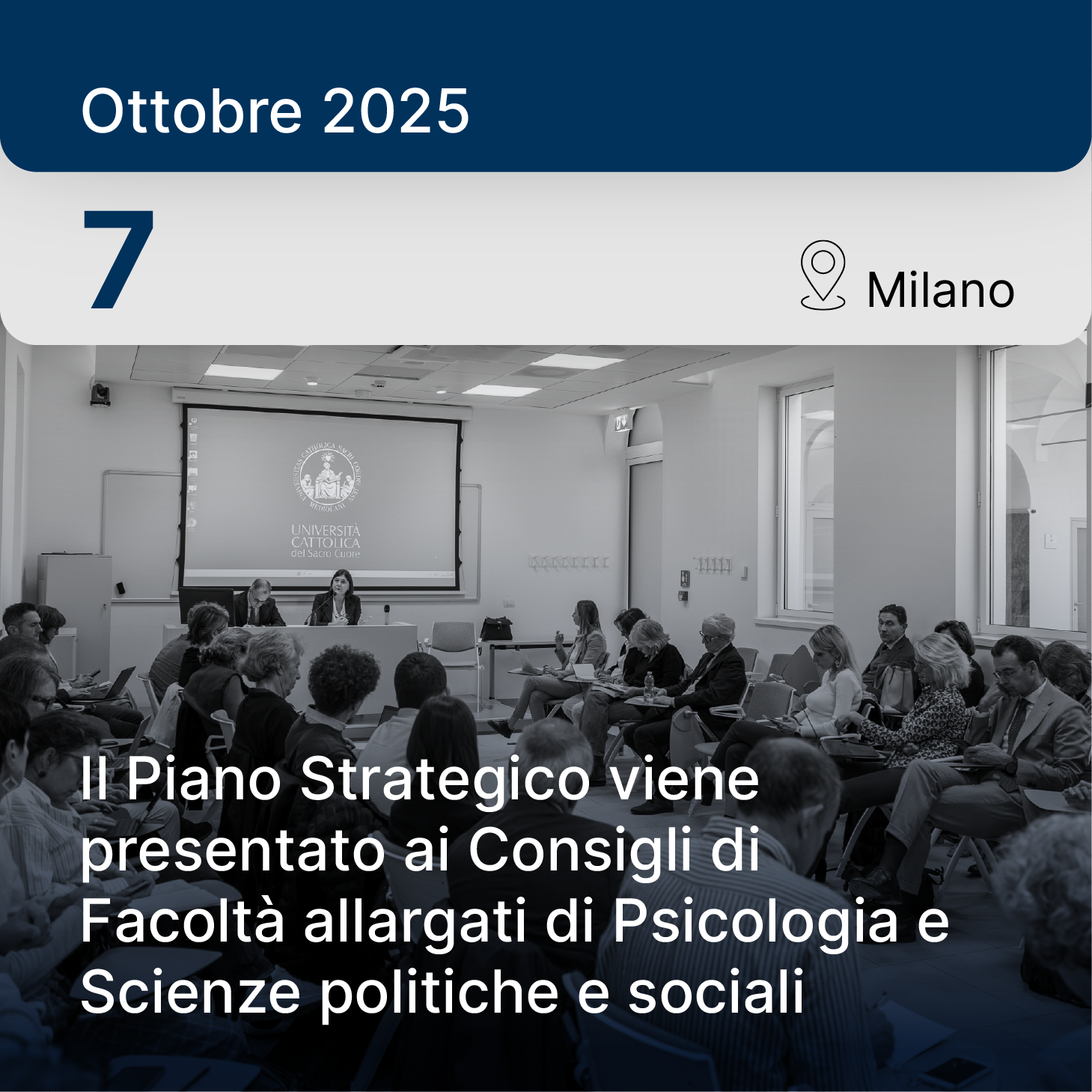
-
-
-
-
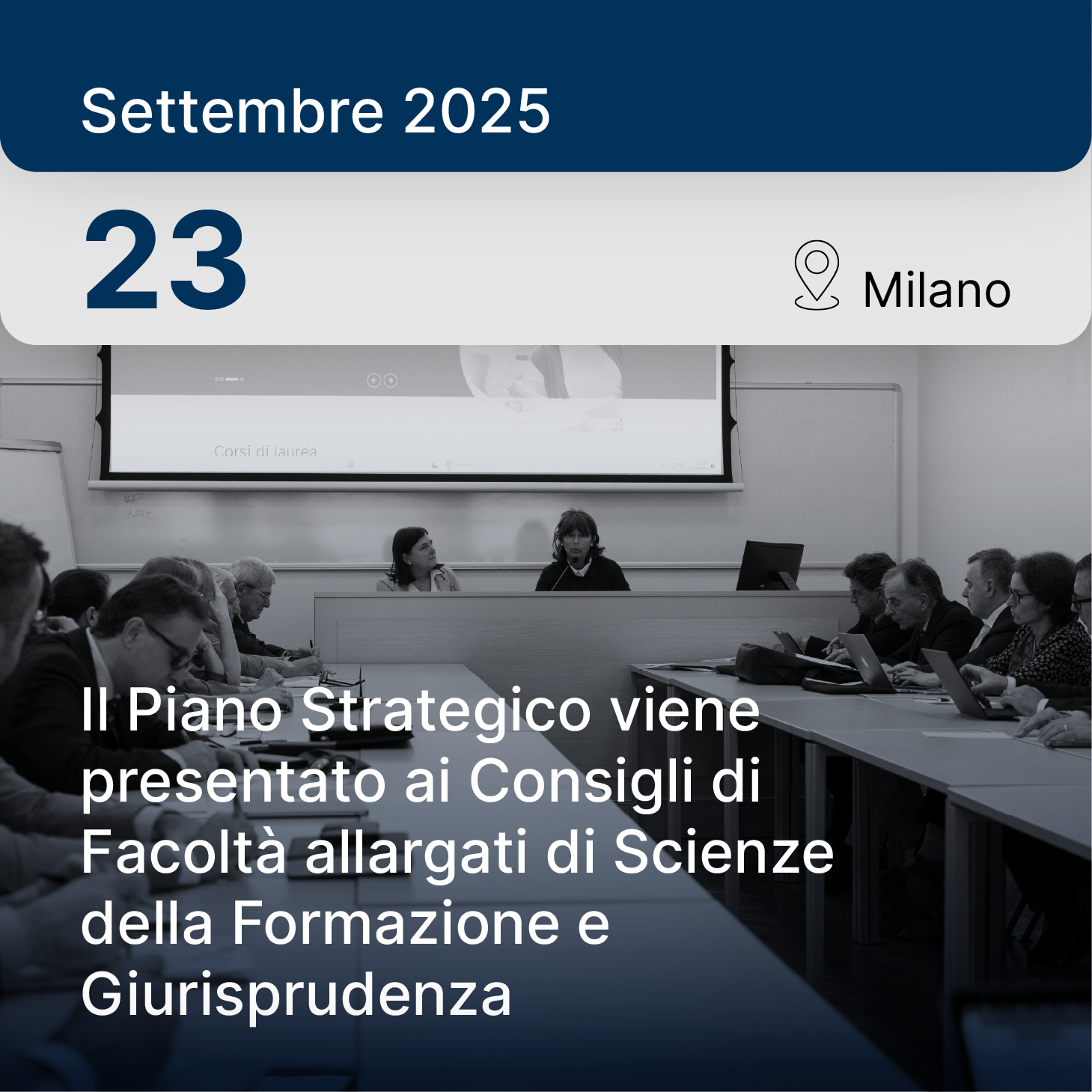
-
-
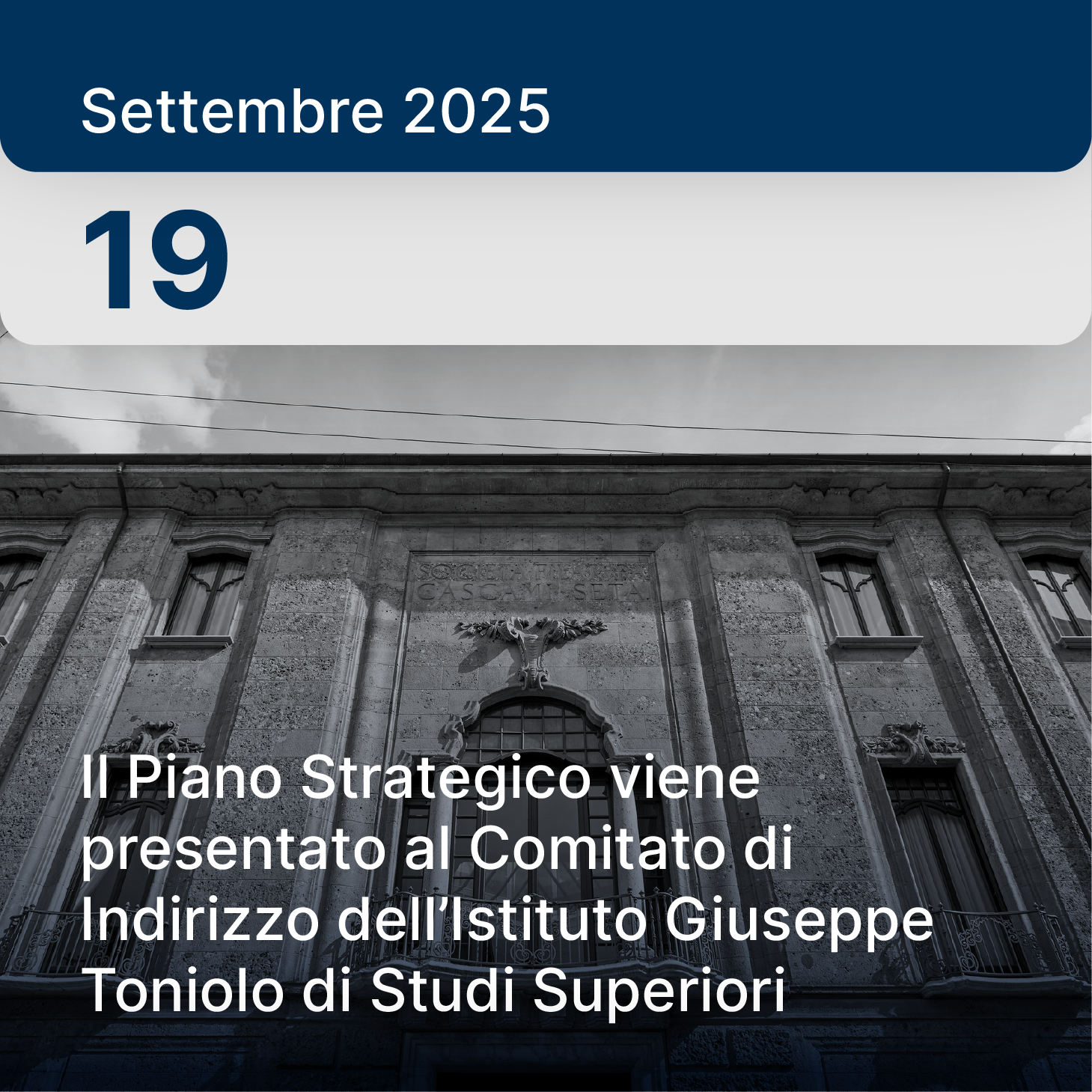
-
-
-
-
-
 Description
Governance and monitoring
The 2026-2028 Strategic Plan provides for governance capable of ensuring the implementation of the strategic action plans, involving the governing bodies, the Faculties, the University Evaluation Board, the Quality Assurance Board, the academic and administrative staff. Communication processes with stakeholders are envisaged, based on transparency and sharing, to encourage participation and methodological continuity. The model incorporates ANVUR guidelines in accordance with AVA3.
The planning cycle is divided into two integrated levels: the strategic one, based on context and SWOT analyses, and the executive one, which translates priorities into objectives and operational actions related to quality assurance.
Each pillar is defined through indicators, baselines, targets, implementation timelines and responsibilities, ensuring traceability and evaluation of results.
The model is integrated with the planning and control cycle and there are moments of alignment with the Evaluation and Quality Assurance Boards. Finally, the University adopts the PDCA cycle, ensuring consistency and adaptability in the pursuit of institutional missions.